Kids don’t just play because it’s fun. They play because they need to. Behind every game of tag, every pump of a swing set, and every backyard adventure is a child developing skills that will last a lifetime.
Research consistently shows that unstructured, active play is one of the most powerful contributors to healthy child development. It shapes the brain, builds the body, strengthens relationships, and fosters emotional resilience. Yet, as screen time climbs and schedules fill up, outdoor play is getting squeezed out.
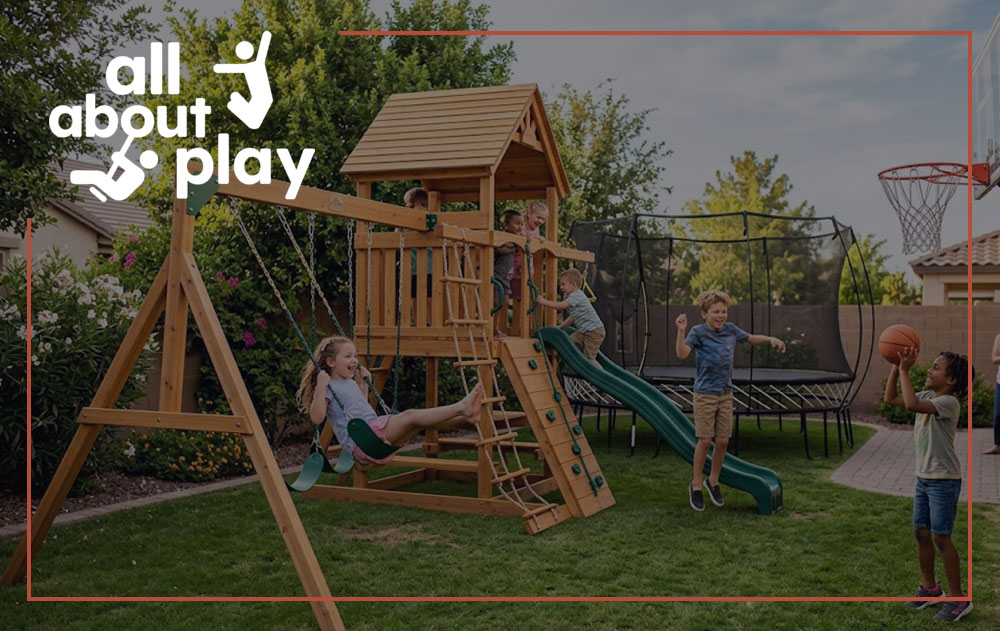
This post breaks down what the science says about play, what it looks like in practice, and how the right backyard setup—think playsets, swing sets, trampolines, and basketball goals—can make a real difference in your child’s development.
What Happens in the Brain During Play
Play activates nearly every region of the developing brain. When children engage in active, imaginative, or social play, their brains are forming and reinforcing neural pathways responsible for language, problem-solving, memory, and emotional regulation.
Outdoor physical play, specifically, triggers the release of brain-derived neurotrophic factor (BDNF)—a protein that supports the growth of new brain cells and strengthens cognitive function. Simply put, kids who move more, think better.
Climbing, swinging, and jumping on a playset also help children develop proprioception—their sense of body position in space. This skill underlies coordination, balance, and even handwriting. These aren’t minor bonuses; they’re foundational abilities that children carry into school and adulthood.
The Physical Benefits of Active Outdoor Play
The childhood years are a critical window for physical development. Bone density, cardiovascular fitness, motor skills, and muscular strength are all shaped significantly during this period. Regular active play builds a strong physical foundation that reduces the risk of obesity, type 2 diabetes, and other chronic conditions later in life.
Here’s what different types of outdoor play can contribute physically:
Swing Sets and Playsets
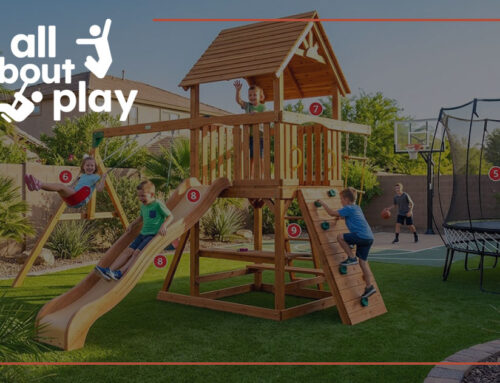
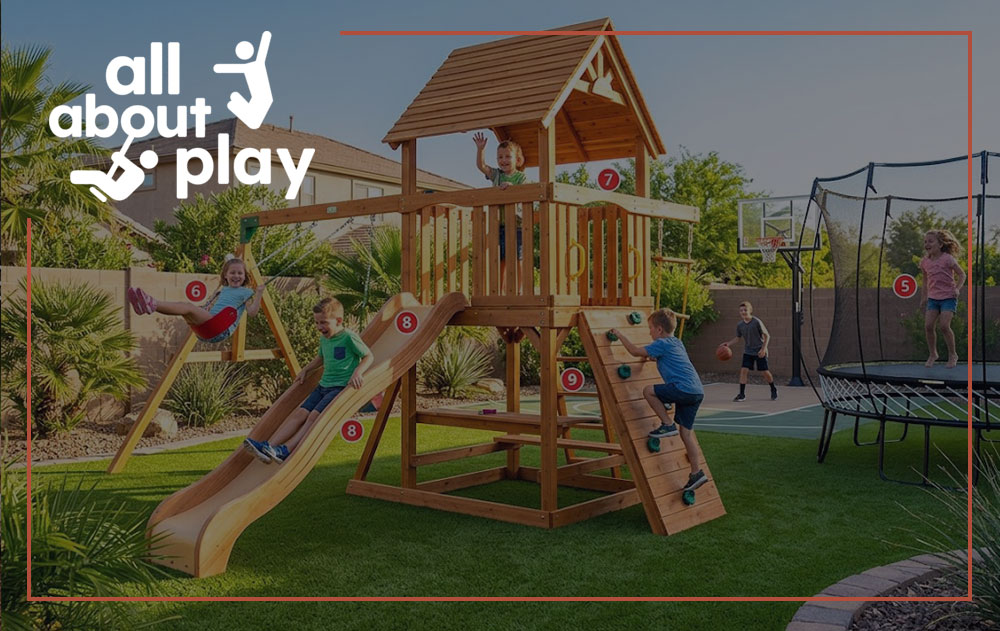
Swinging develops core strength, coordination, and balance. The rhythmic motion also has a calming, regulating effect on the nervous system—which is why many children instinctively seek out a swing when they’re overstimulated or anxious. Climbing structures built into a playset build upper body strength, grip, and spatial awareness.
Trampolines
Trampolines are more than just a good time. Bouncing engages the lymphatic system, supports cardiovascular health, and improves balance and coordination. It’s also a low-impact activity compared to running on hard surfaces, making it easier on growing joints. Kids who struggle to stay active often love trampolines precisely because the effort doesn’t feel like exercise.
Basketball Goals
Shooting hoops builds hand-eye coordination, lateral agility, and endurance. Basketball goals also naturally invite social play—kids are quick to invite friends over when there’s a game to be played. That social dimension multiplies the developmental benefits far beyond the physical.
Social and Emotional Development Through Play
Play is where children practice being human. When kids play together, they negotiate rules, take turns, manage disappointment, resolve conflicts, and experience the satisfaction of shared achievement. These are the building blocks of emotional intelligence.
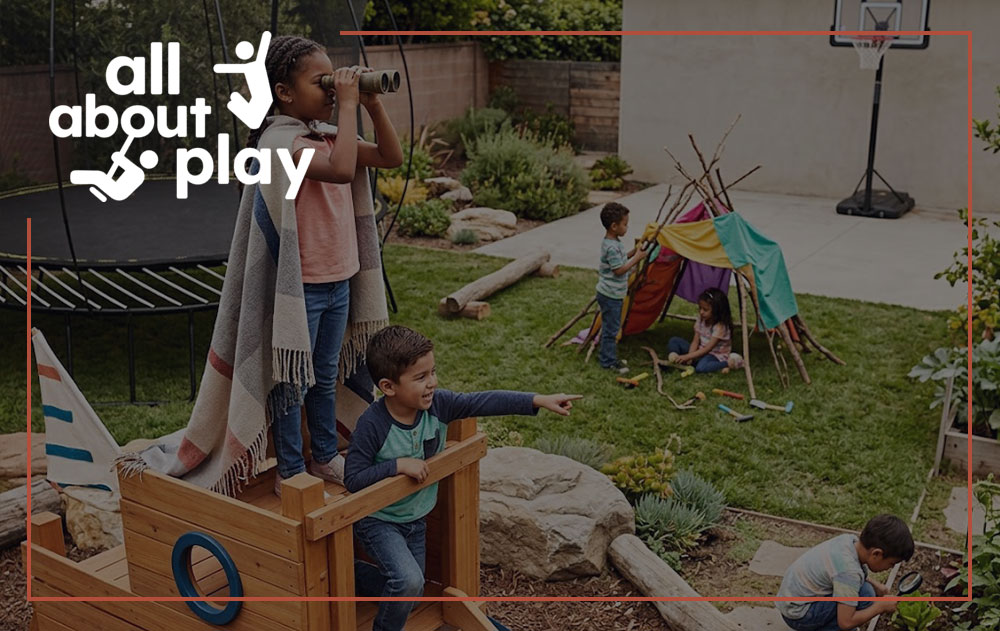
Unstructured backyard play—the kind that unfolds without adult direction—is especially valuable here. Children create their own games, assign their own roles, and solve their own problems. That process teaches self-regulation, leadership, empathy, and creativity in ways that structured activities rarely replicate.
Having a dedicated play space at home also changes family dynamics. Parents and siblings who share the space—whether on a swing set, shooting hoops, or jumping on a trampoline—build connection through shared experience. These aren’t just memories; they’re the moments that define childhood.
Creative and Cognitive Growth
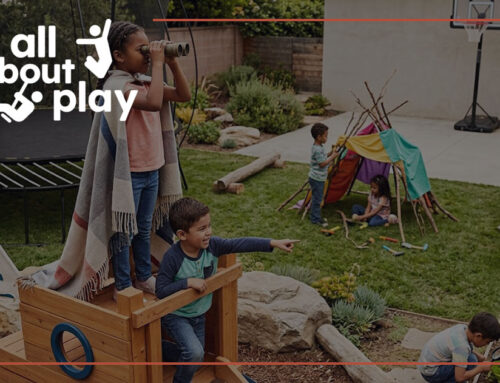
Play and imagination go hand in hand. A backyard playset isn’t just a structure; it’s a pirate ship, a castle, a science lab, or a rocket depending on what the child decides. That kind of open-ended imaginative play develops divergent thinking—the ability to generate multiple solutions to a problem—which is one of the most sought-after skills in the modern workforce.
Physical challenges also build cognitive resilience. When a child attempts to climb to a new height, fails, adjusts their approach, and tries again, they’re developing a growth mindset. They learn that effort matters, that failure is information, and that persistence pays off. Those lessons don’t come from a screen.
The Case for a Backyard Play Space
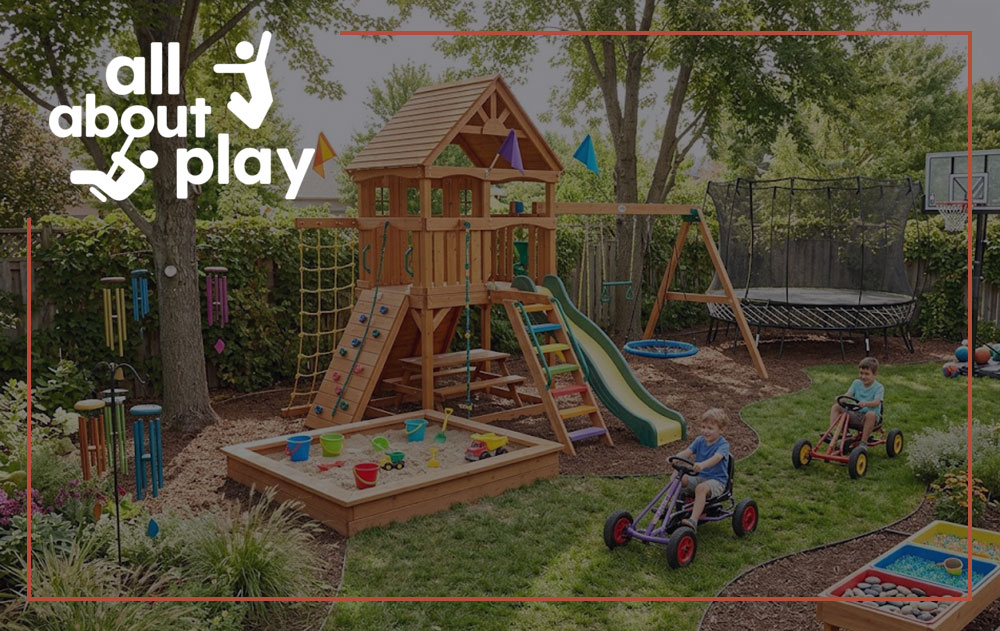
Neighborhood parks and school playgrounds are great—but they come with limitations. Weather, distance, supervision constraints, and limited availability can all reduce how often kids actually get out and play. A backyard play setup removes most of those barriers.
When quality playsets, swing sets, trampolines, and basketball goals are right outside the back door, play happens more often, more spontaneously, and for longer stretches of time. Kids don’t need to be driven somewhere or scheduled in. They just go outside.
That accessibility matters more than most parents realize. The American Academy of Pediatrics recommends at least one hour of physical activity per day for children ages 6 to 17. A well-equipped backyard makes hitting that target a natural part of the day rather than a chore.
Choosing the Right Equipment for Your Child
Every child is different. Age, temperament, physical ability, and available space all factor into what kind of play equipment will get the most use. A few general guidelines:
- Toddlers and young children (2–5): Look for playsets with lower platforms, gentle slides, and baby swings. Safety and accessibility come first.
- School-age children (6–12): Swing sets with higher platforms, climbing walls, and monkey bars offer more challenge and keep older kids engaged. A trampoline or basketball goal adds variety.
- Multiple age groups: Versatile, customizable playsets work best for families with children at different stages. Look for equipment that can grow with your kids.
Material quality matters too. Cedar playsets, like those carried by All About Playgrounds, are naturally resistant to decay and insects, dimensionally stable, and built to last for years without harsh chemical treatments—making them a safe choice for the whole family.
Make Your Backyard the Place Kids Want to Be
Childhood is short. The window for active, imaginative, outdoor play closes faster than most parents expect. Investing in the right play environment isn’t an indulgence—it’s one of the most meaningful things you can do for your child’s physical health, cognitive development, and emotional wellbeing.
At All About Playgrounds, we help Arizona families build that environment. From high-quality swing sets and playsets to trampolines and basketball goals, we carry the equipment that keeps kids moving, growing, and thriving. With free delivery and assembly throughout the Phoenix metro area, a lifetime product warranty, and a team that genuinely cares about getting it right, we make the process simple.
Ready to transform your backyard? Contact All About Playgrounds today to schedule a free in-home consultation, or visit our showroom in Mesa to see our full range of playsets and outdoor equipment in person.