As parents, our instinct to protect our children is fierce. We watch them climb, run, and jump, and our internal alarm bells often ring at the slightest hint of danger. It’s natural to want to wrap them in bubble wrap to keep the scrapes and bruises at bay. However, an increasing body of research suggests that stepping back and allowing “risky play” might be one of the most beneficial things we can do for their growth.
Risky play doesn’t mean putting children in actual danger. It isn’t about ignoring safety or allowing reckless behavior. Instead, it’s about giving kids the freedom to explore uncertainty, test their limits, and solve problems on their own. Whether it’s climbing a little higher on a swing set, balancing on a log, or jumping from a height that feels just a bit scary, these experiences are crucial for building resilience, confidence, and physical competence.
In this guide, we will explore why risky play is a fundamental building block of childhood development, how it fosters independence, and how you can facilitate safe, thrilling play environments right in your own backyard.
What Exactly is Risky Play?
Before we dive into the benefits, it is important to define what we mean by “risk.” In the context of child development, risky play refers to thrilling and exciting forms of play that involve a risk of physical injury. It is the kind of play where the child feels a butterfly-in-the-stomach sensation—a mix of fear and excitement.
Ellen Sandseter, a professor and researcher often cited in this field, categorizes risky play into six main types:
- Great Heights: Climbing trees, walls, or tall structures where there is a risk of falling.
- Great Speed: Swinging high on swing sets, riding bikes fast, or sliding down slides uncontrollably.
- Dangerous Tools: Using knives, saws, or ropes (under supervision) to build or create.
- Dangerous Elements: Playing near water, fire, or steep cliffs.
- Rough-and-Tumble Play: Wrestling, fencing with sticks, or play-fighting.
- Disappearing/Getting Lost: Exploring unknown areas or hiding where adults can’t immediately see them.
While “dangerous” is in the name of these categories, the goal isn’t injury; the goal is the management of risk. It allows children to encounter the edge of their capabilities and push past them safely.
The Developmental Benefits of Risky Play
When children engage in play that challenges them physically and mentally, the rewards extend far beyond just having fun. Here is how risky play shapes a child’s future.
Building Resilience and Persistence
Life is full of obstacles. When a child attempts to traverse the monkey bars on a playset and falls, they learn a valuable lesson about failure. They learn that falling isn’t the end of the world. They dust themselves off, assess why they slipped, and try again. This cycle of effort, failure, and eventual success builds emotional resilience. It teaches them that setbacks are temporary and that persistence pays off.
Developing Risk Assessment Skills
You cannot learn to manage risk if you are never exposed to it. When a child stands at the top of a slide or prepares to jump from a swing, they are performing a complex mental calculation. They are assessing their own skill level against the challenge in front of them. By allowing them to take these small risks, we teach them how to identify hazards and make smart decisions. Over-protecting children can actually have the adverse effect of making them more accident-prone later in life because they never learned to judge their own limits.
Boosting Physical Health and Coordination
Risky play is often active play. Climbing high playsets, balancing on beams, or pedaling Pedal Go-Karts requires strength, balance, and coordination. These activities help develop gross motor skills and spatial awareness. Children who engage in active, challenging play tend to have better overall physical health and are more confident in their bodies’ abilities.
Enhancing Social Skills
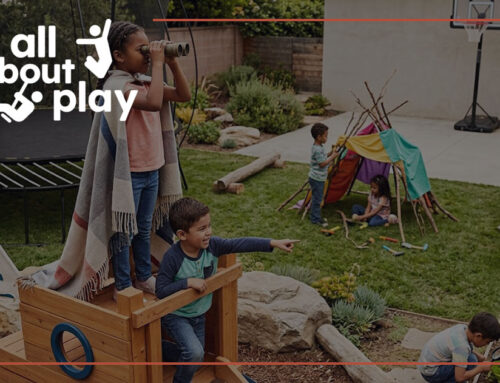
Have you ever watched a group of kids decide who jumps off the swing first or how to build a fort? Risky play often requires negotiation, cooperation, and conflict resolution. Basketball Goals provide a great arena for this, where rules must be followed, and disputes settled without adult intervention. Rough-and-tumble play helps children understand boundaries—learning when they are pushing too hard and how to read their playmate’s emotional cues.
Overcoming the Fear of Injury
It is understandable that parents worry about injuries. No one wants to see their child in pain. However, statistics show that while minor injuries (scrapes, bruises, bumps) are common in play, serious injuries are relatively rare.
Developmental psychologists argue that the benefits of risky play outweigh the risks of minor injuries. A scraped knee heals quickly, but the confidence gained from climbing that tree lasts a lifetime. Furthermore, by removing all risk, we may be contributing to a rise in anxiety among children. If a child is constantly told “Be careful!” or “Get down from there!”, they may internalize the message that the world is inherently dangerous and that they are incapable of handling it.
Creating Safe Environments for Risky Play
The key to successful risky play is providing a “safe” environment where “risky” things can happen. This means creating spaces where hazards (things a child cannot see or predict, like a broken railing or faulty equipment) are removed, but challenges (things a child can navigate, like height or speed) remain.
The Role of Backyard Equipment
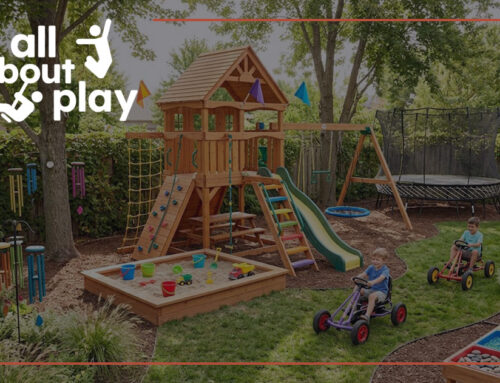
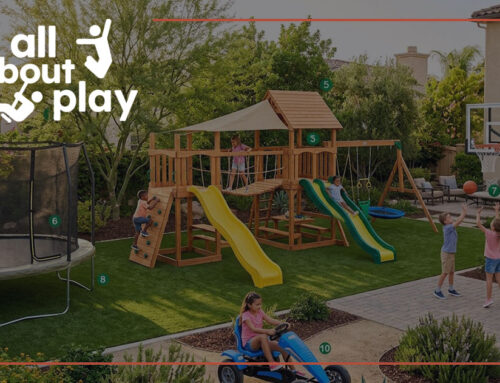
One of the best ways to facilitate this balance is through high-quality backyard equipment. A well-constructed playset or swing set offers controlled risk.
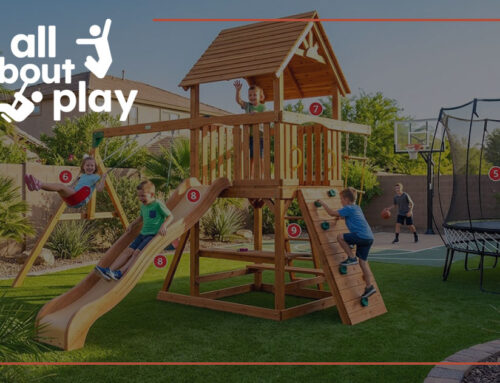
- Controlled Height: Climbing walls and towers on playsets allow kids to experience height, but with sturdy handholds and safety rails where appropriate.
- Controlled Speed: Trampolines and slides offer the thrill of speed and flight, but within a designated, padded area.
- Physical Challenge: Basketball Goals and monkey bars challenge muscles and coordination without the unpredictability of “wild” environments.
When you invest in quality equipment, like the Cedar playsets we offer at All About Playgrounds, you are ensuring the structural integrity is sound. This removes the hazard (the wood won’t snap, the bolts won’t rust out) so the child can focus on the risk (can I climb this high? Can I swing this fast?).
The “17-Second Rule”
Experts suggest a simple technique for parents called the “17-Second Rule.” When you see your child doing something that makes you nervous, pause for 17 seconds before intervening (unless there is immediate, life-threatening danger).
In those 17 seconds, observe. You might see your child adjust their footing, check their grip, or ask for help. Often, they resolve the situation themselves. If you shout “Stop!” immediately, you break their concentration and rob them of the opportunity to problem-solve.
Choosing the Right Equipment for Your Child’s Age
To encourage healthy development, the equipment should match the child’s developmental stage.
- Toddlers (1-3 years): Focus on low-level climbing and sliding. Small slides and bucket swings are perfect. They introduce the sensation of movement and gravity without overwhelming height.
- Preschoolers (3-5 years): This is the age of exploration. Swing sets with belt swings, slightly taller slides, and simple climbing walls help them test their growing strength. Trampolines (with safety nets) are excellent for building core strength and balance.
- School Age (5-12 years): These kids need bigger challenges. Look for playsets with monkey bars, rope ladders, and higher decks. Pedal Go-Karts offer a sense of speed and control. Basketball Goals introduce competitive play and skill mastery.
The Long-Term Impact on Confidence
Ultimately, the goal of risky play is to raise adults who are confident, capable, and not afraid to fail. When a child conquers the highest rung of the ladder or finally nails a jump shot on their Basketball Goal, they get a rush of dopamine and a surge of self-esteem. They learn “I can do hard things.”
This mindset translates into the classroom and eventually the workplace. A child who has learned to assess physical risks is better equipped to assess social and intellectual risks—like raising their hand to answer a tough question, standing up to a bully, or starting a new project.
Conclusion
Embracing risky play requires a shift in mindset. It means moving from a role of “protector” to a role of “facilitator.” It means trusting our children to listen to their bodies and instincts. By providing them with high-quality equipment—whether it’s Trampolines, Playsets, or Pedal Go-Karts—we give them the tools they need to explore their limits safely.
At All About Playgrounds, we understand this delicate balance. We are dedicated to providing Arizona families with equipment that is safe, durable, and fun, allowing your kids to experience the thrill of the playground right in the safety of your own backyard. Let them climb, let them jump, and let them grow.
All About Play – Backyard Playground Equipment
7931 E Pecos RD #113,
Mesa, AZ 85212
623-986-7529 (PLAY)